
WARNING: SPOILERS AHEAD
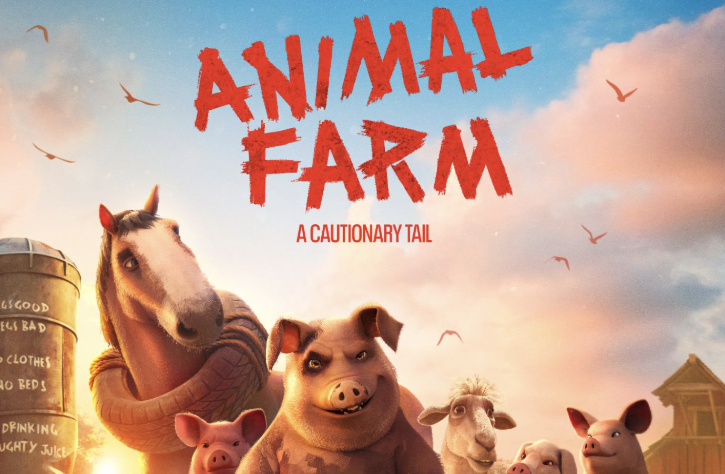
Over the span of 80 years, filmmakers have attempted to adapt George Orwell’s 1945 novella “Animal Farm” three times, each one ending in failure. The 1954 adaptation was a CIA-funded propaganda piece. The 1999 version featured animatronic farm animals from Jim Henson’s Creature Shop. Now, in 2026, director Andy Serkis brings yet another attempt to theaters. While each version alters Orwell’s novella in slightly different ways, they share one notable similarity: all three abandon the bleakness of Orwell’s original ending in favor of a more optimistic conclusion.
Orwell wrote “Animal Farm” as an allegory of the Russian Revolution of 1917. He mirrored the fall of the House of Romanov (the last royal family of Russia) and the rise of the Bolsheviks (Russian revolutionaries). “Animal Farm” traces the contours of major events occurring in the early years of the Union of Soviet Socialist Republics through the lens of farm animals rebelling against their human overlords. In the early 1940s, as Orwell wrote this essential work, the threat of totalitarianism loomed over Europe, and the novella reflects those fears clearly.
It is not a story of hope and resilience, yet all three film adaptations desperately attempt to frame it as one. “Animal Farm” is not a mere fairy tale; it is a warning of the fragility and value of democracy and the dangers of absolute power.
In the original novella, the pigs, who replace the humans as the ruling class, each represent a key figure or aspect of the time. Napoleon represents Joseph Stalin. Snowball is Leon Trotsky. Squealer serves as Napoleon’s lead propagandist. Boxer, a beloved cart-pulling horse, symbolizes the working class. The 2026 film dilutes these carefully curated roles with the introduction of new and unnecessary characters, most notably Lucky, as the protagonist.
In Orwell’s novel, the collective rebellion drives the story. In the new film, Lucky is a young pig caught in the crossroads between attachment to Napoleon and loyalty to the rebellion against the humans. However, Lucky’s story fails to gain traction; he simply serves the hollow role of providing younger audiences a conventional protagonist to latch onto through his arc of corruption and redemption. Because Lucky has no counterpart in the Russian Revolution or Soviet history, his storyline degrades the historical integrity of Orwell’s allegory.
Maybe even more damaging are the omitted characters. Old Major (the wise old boar, who originally proposed the rebellion) and Mollie (a show horse emblematic of the bourgeois class) are entirely absent. Removing Old Major was particularly unwise. In the novel, he represents Vladimir Lenin, a key leader of the Russian Revolution, stirring the animals to rebellion. By having Snowball (Trotsky) spark the uprising, the film further distances itself from its historical connection.
Another important change is that Serkis pivots the film’s focus towards the pigs’ internal corruption and moral conflict. In the novel, the common animals (the majority) drive the story, and their perspective sheds light on the pig’s insidious corruption. By focusing on the pigs’ rise to power, and especially Lucky’s personal journey, the film misses a chance to highlight the key conditions of the harsh life under the rule of the humans, and then the pigs.
Within the first 10 minutes, the 2026 film features an abrupt shift in leadership. In line with the novella, the cruel human authority is overthrown and Manor Farm is claimed by the animal population. Snowball immediately seizes power and lays out a series of rules for all animals to follow. As time passes, Napoleon grows jealous of Snowball’s leadership and chases Snowball off the farm.
Yet things quickly go awry. Under Napoleon’s governance, the pigs’ become enamored with human novelties: fluorescent lights, electronic music, and shopping malls. Their overconsumption and greed grows worse than the humans, as the common animals are forced to work long hours. As food supplies shrink, Napoleon grows desperate. In this updated version, he hastily forms an alliance with a tech-billionaire owner of a major farming enterprise, Freida Pilkington (representative of the capitalist West), who wishes to expand her empire and build a power plant on the farm’s land. Throughout the film, Lucky wavers between loyalty to the pigs and rebelling against Napoleon’s rule.
After witnessing Boxer being sent to the glue factory, Lucky abandons any final shred of respect for Napoleon. He leads a second revolt, this time ending in Napoleon’s death. The film concludes as the remaining animals gaze towards the stars, vowing to create a society where all are truly equal.
Like the previous cinematic works, the 2026 film opts for a hollow victory, and it’s here that Orwell’s allegory truly dies. Orwell concludes his original novel with a haunting line, “The creatures outside looked from pig to man, and from man to pig, and from pig to man again; but already it was impossible to say which was which” (Orwell, 1945, p. 141). Orwell’s original ending emphasizes the total loss of revolutionary ideals. In the novella, the ruling pigs have come full circle, reinstating the poor conditions for the working animals.
Across three film adaptations, the pigs are never permitted to truly “win.” And yet for Orwell, their overarching control is pivotal, as it shows that the Soviet Government–and totalitarian governments at large – masked themselves, claiming to be united with the common people, while taking on the role of the oppressors they initially sought to replace.
John Halas and Joy Batchelor’s 1954 version, was released at the height of the Cold War in the U.S. and U.K. The film-makers believed portraying pigs as winning would promote Communism, so instead they opted to conclude with a heroic Benjamin, a cynical donkey, leading an uprising to destroy the hierarchy.
The central shift in John Stephenson’s 1999 version is the elevation of Jessie, a working class dog (and minor character in Orwell’s novella) to the role of protagonist and narrator. This version concludes with an ending thematically similar to the 2026 film with its reliance on hope. It follows Jessie and her band of animals as they escape to the outskirts of the farm, hiding out and waiting until the pigs eventually destroy their own system. Only then are the animals able to return with the goal of rebuilding the farm in the manner that Old Major initially intended.
Again and again, these adaptations refuse to confront Orwell’s original conclusions. Even Orwell’s work can not evade Hollywood’s inevitable and predictable happy endings. Serkis replaces Orwell’s brutal finality with something far more palatable and optimistic. But maybe it’s more disturbing that Serkis doesn’t trust audiences the way Orwell did, asking them to confront the bleak uncertainty of absolute power.