

May is Asian American and Pacific Islander (AAPI) Heritage Month — a time designated to celebrate Asian and Pacific Islander history and culture. Streaming platforms have already risen to the occasion by providing their own curated collections of AAPI movies, film, and television shows.
Instead of spending half the night scrolling, here are eight standout choices for movie night this month to learn more about the Asian community.
“Crouching Tiger, Hidden Dragon” (2000)

“Crouching Tiger, Hidden Dragon” (2000) is one of the most well-known wuxia martial art films of all time. Directed by Ang Lee (the award-winning director of “Life of Pi” and “Brokeback Mountain”), the film is set in Qing dynasty China.
Retiring Wudang swordsman Li Mu Bai and his good friend Yu Shu Lien, who have long repressed feelings for each other, gift the Green Destiny (Mu Bai’s legendary 400-year-old jian) to Sir Te, their benefactor. However, it is promptly stolen by a masked thief.
The masked thief is then revealed to be Jen Yu, the daughter of a rich and powerful governor. Forced into marriage against her will, Jen eventually goes rogue, pushing Mu Bai, Shu Lien, and Jen’s former mentor into conflict as they seek to regain the Green Destiny and defend their position in the world of Wudang, repeatedly clashing in thrillingly staged battles revealing expert cinematography. These plot points enhance the film’s plot, creating an exciting and embellished presentation of the story.
This not only is a smackingly good martial arts film but also a poignant feminist outcry. “Crouching Tiger, Hidden Dragon” brings an epic experience for viewers through its artistically choreographed battles, breathtaking scenery, and theatrical storyline. The film was the first non-English language film to break the $100 million mark in the United States box office and is critically acclaimed, ranking No. 79 in the best 100 movies in the twenty-first century, according to The Rolling Stone.
“Crouching Tiger, Hidden Dragon” is a great introduction to martial arts legends, a beloved aspect that is very prevalent in Asian culture. Through its magnificent costumes and scenery, the film provides an immersive and distinctly Asian experience for the audience.
For both fans of martial arts movies and new watchers alike, “Crouching Tiger, Hidden Dragon” is a classic that is absolutely worth the hype. It is available to watch for free on Tubi or with a subscription on Amazon Prime Video.
“In the Mood for Love” (2000)
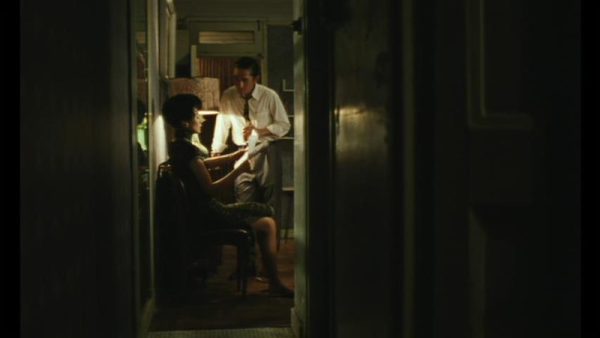
Set in early 1960s Hong Kong, “In the Mood for Love” (2000) follows two Shanghainese expatriates who move into neighboring apartments — journalist Chow Mo-wan and secretary Su Li-zhen (referred to throughout the film as Mrs. Chan). Both spend a majority of their time without the presence of their respective spouses, who seem to be married to their work instead.
Soon, Chow and Mrs. Chan discover that their spouses are having an affair with each other and take it upon themselves to never commit the same betrayal their spouses did. Having already grown respect for each other, Chow invites Mrs. Chan to write a martial arts serial.
So begins a slow and gradual romance as they reenact scenes of how their spouses’ affair may have begun, while still unwilling to act on their own growing feelings. The film’s moving portrayal of their steady romance unfolds a transformative, tragically beautiful story that will leave audiences stunned.
Starring Maggie Cheung and Tony Leung Chiu-wai and directed by Wong Kar-wai, “In the Mood for Love” has been widely celebrated for its actors’ performances and use of colour and imagery — Leung became the first Hong Kong actor to receive the Best Actor award at the 53rd Cannes Film Festival after his performance in the film.
“In the Mood for Love” doesn’t just stop at the actors’ performance. The soundtrack, especially “Yumeji’s Theme”, perfectly encompasses the emotional weight of each scene depicted onscreen without feeling overwhelming. The thoughtful composition of each shot not only shows skilled cinematography but also allows for added emotional depth and visual appeal.
Not only is it a movie of incredible quality, but it has an impactful story to guide viewers through as well.
“In the Mood for Love” spins a heartwrenching tale of soulmates, the human desire for genuine connection, and incomplete love. Furthermore, the film is authentically Asian, not only in aesthetic and visual aspects but also in the themes it represents — the unwavering instinct to keep personal conflicts a secret and quietly remain on the set path; the same instinct that has been traditionally enforced in many Asian communities.
For film watchers who enjoy “Lost in Translation,” “La La Land,” or any other beautiful and emotionally driven cinema, “In the Mood for Love” is the perfect movie to watch. It is available to watch for free on Pluto TV or with a subscription on HBO Max, YouTube, or Amazon Prime Video.
“Infernal Affairs” (2002)
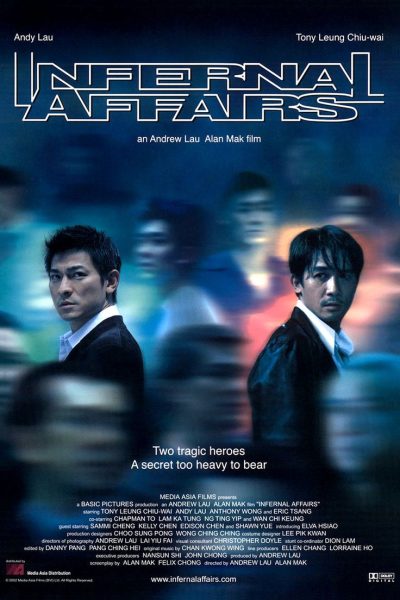
Leung returns in crime-thriller “Infernal Affairs” (2002), in which he plays Chan Wing-yan, a star police student turned undercover cop in a notoriously troublesome Hong Kong triad. Meanwhile, Lau Kin-ming, a supposed cadet from the same academy, was actually installed by the gang’s boss to pose undercover in law enforcement and report back to the gang.
Nobody but Chan and the police superintendent are aware of his true allegiance — on the other hand, nobody but Lau and the triad boss are aware of his true allegiance.
Years later, Lau becomes a senior inspector, while Chan’s mental health deteriorates from years of living undercover and committing crimes to maintain his cover. Chan grows wary of the idea that he is becoming an actual criminal.
After a drug deal gone wrong, both the police and triad discover there is an enemy mole within their organization. Chan, Lau, the police, and the triad members must race to identify the mole planted within their own organization without revealing the identities of their own moles. The characters’ growing anxiety and hurt conscience are wonderfully portrayed by the actors in a way that makes each character complex in their own way.
Despite already being perfect, “Infernal Affairs” is more commonly known in the United States as its American remake, “The Departed,” which stars Leonardo DiCaprio and Matt Damon. However, despite its promising set-up, “The Departed” fails to capture the blistering rawness and emotional punch “Infernal Affairs” delivers.
Leung’s portrayal of Chan far exceeds that of DiCaprio’s, with Leung perfectly embodying a sad and troubled but charming air about Chan’s character. Andy Lau also delivers a powerful performance as Lau, the triad’s mole, as he grows comfortable in his undercover life and questions the morality of his allegiance.
Additionally, “The Departed” compresses two female characters from “Infernal Affairs” into one, forming an odd and unfitting love triangle to connect Lau and Chan.
“Infernal Affairs” is a thrilling execution of a story about crime and the grey area between good and evil, but is also a brilliant dissection on deceit, morality, and identity. The film is heavily rooted in Buddhist philosophy, namely the concept of avīci, or the lowest level of hell, characterized by endless extreme suffering. The film presents an inspiring and thought-provoking yet subtle exploration of how lying and masking your true identity can be a “hellish” experience.
“Infernal Affairs” is an underrated must-watch sure to be loved by crime TV enthusiasts and philosophers alike. It’s available to watch with a subscription on HBO Max, YouTube, The Roku Channel, or Amazon Prime Video.
“Big Hero 6” (2014)

Set in the futuristic city of San Fransokyo, animated Disney movie “Big Hero 6” (2014) tells the story of 14-year-old robotics prodigy Hiro Hamada following his older brother Tadashi’s passing in a fire on his college campus after Hiro’s microbot technology piques the interest of a professor.
Tadashi leaves behind his most recent project leading up to his death — a healthcare assistant robot named Baymax. After Hiro’s cutting-edge technology uncovers the truth behind a mysterious suspect who could’ve been the cause of the fire that killed Tadashi, Hiro and Tadashi’s college friends unite to weaponize Baymax along with their inventions in order to take down the villain.
“Big Hero 6” is recommended by Jasper Meller (11), a member of the Asian Student Alliance (ASA) at Dos Pueblos High School. He says he believes the film’s setting of San Fransokyo helps spread awareness of Asian history.
“It shows … a futuristic city, but it’s also based on the real fact that a lot of Japanese immigrants helped build San Francisco, and it shows a combination of that,” Meller said.
Meller says that he enjoys learning about Asian contributions to California and the United States, especially those of Chinese and Japanese immigrants.
“I, as a non-Asian person, … [have] learned a lot about Asian contributions to the country,” Meller said. “It just made me better appreciate my friends and their families and the community.”
“Big Hero 6” is available to watch on Disney+ with a subscription.
“Your Name” (2016)
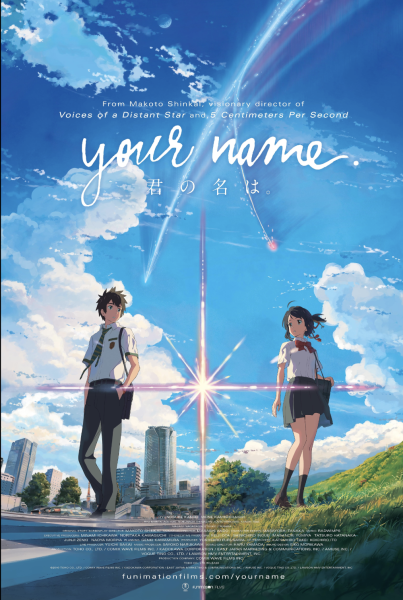
“Your Name” (2016) is a Japanese animated film about Mitsuha and Taki, two high school students who mysteriously begin to switch bodies sporadically. Mitsuha lives in a rural town in the Gifu Prefecture, while Taki lives in Tokyo, the two begin leaving notes and setting rules for living in each others’ bodies, forming an emotional bond as they learn more about each others’ daily lives.
One day, they inexplicably stop switching bodies. Not knowing the name of Mitsuha’s town, Taki sets out to find her. However, he discovers that the body-switching is more complicated than it seems.
A lighthearted but emotionally satisfying film, “Your Name” spins a dazzling tale of soulmates, adolescence, and connection across time and space. It captures the everyday beauty of both Japanese rural and city life.
Fans of “Weathering With You” or “Suzume” will enjoy this beautiful fantasy film, which is available with a subscription on HBO Max, YouTube TV, Hulu, The Roku Channel, or Amazon Prime Video.
“The Farewell” (2019)

“The Farewell” (2019) is a comedy-drama film following an aspiring Chinese-American writer, Billi, who discovers that her grandmother, Nai Nai, has terminal lung cancer and only has a few months left to live.
However, Nai Nai is told that the doctors’ findings are benign. Instead, the family organizes a wedding as an excuse to reunite the family and spend what may be their last moments together with Nai Nai. Most importantly, they are determined to prevent Nai Nai from knowing the truth about her condition and the real reason behind the reunion.
Throughout the reunion, Billi struggles with conflicted feelings regarding her family’s deliberate deception. Her family argues that shielding her from the diagnosis is an act of love rooted in a Chinese sense of collective responsibility.
Based on the director’s personal experience, “The Farewell” is a thought-provoking story that explores a new perspective on familial love, the immigrant experience, and cultural differences.
The film is funny but holds high sentimental value. Awkwafina’s standout performance as Billi won a Golden Globe award in 2020 and accurately captured the internal conflict of an “Americanized” immigrant still holding onto emotional ties with their homeland.
If you liked “Minari,” you’re sure to love “The Farewell,” which is available to watch for free on YouTube, Xumo Play, Tubi, Pluto TV, Fandango at Home, and PLEX.
“Raya and the Last Dragon” (2021)

Disney animated film “Raya and the Last Dragon” (2021) brings viewers to the region of what was once the magnificent kingdom of Kumandra, a once-unified land where humans and dragons lived in harmony. However, years later, Kumandra has fractured into several rival regions all fighting for the Dragon Gem — the last remnant of dragon magic.
Raya is a young princess from Heart, the region tasked with guarding the Dragon Gem. One day, she makes the naïve mistake of trusting Namaari, a young princess from the rival region of Fang, and consequently shatters the Dragon Gem and reincarnates the Druun — soul-eating, invincible monsters that devastate the population and end up turning her father to stone.
Time passes. Raya is determined to get her father back, and to do so, she attempts to recover the pieces of the Dragon Gem from the mistrustful, fierce leaders who hold them. However, it soon becomes clear that Raya must do more than win the Dragon Gem for herself — she must also learn to trust others again in a world that has become cruel and eventually face Namaari again.
“Raya and the Last Dragon” holds a special place in my heart. It was released during the pandemic, a time when many Asian individuals, myself included, felt threatened by the rise in violence. As a Vietnamese American in fifth grade, I felt underrepresented within the casts of movies and books meant for younger audiences.
However, that changed with “Raya and the Last Dragon.” The film was the first time I saw Southeast Asian representation onscreen. Raya calls her father “Ba,” and so do I. She and Namaari call each other “đẹp lạ” upon first meeting — a phrase which means “strangely beautiful” in Vietnamese. It meant the world to me that someone who technically qualified as a Disney Princess was eating longan — when I did the same thing in first grade, my peers spread a rumour that I was a witch.
“Raya and the Last Dragon” does a spectacular job representing Southeast Asian cultures in a fun and lighthearted way. It presents a previously underrepresented culture in a way that is beautiful and inspiring, an important task for a company that is so widely beloved by young audiences.
The story itself may not be high-grade tear-jerking cinema, but it works because of its emotional core. At its center, this is a story about learning to trust and rebuild. The soundtrack is captivating, using brilliant dynamics and melodious, rising themes to enhance the appeal of the film’s aesthetics, scenery, and story.
“Raya and the Last Dragon” is a terrific movie to watch with family for a fun and heartwarming movie night and is available with a subscription on Disney+.
“Everything Everywhere All at Once” (2022)

“Everything Everywhere All at Once” is a comedy-drama following Evelyn Wang, a Chinese American immigrant struggling with an impending IRS audit, her relationships with her husband and daughter, and the pressure of assimilating into American culture.
Evelyn eventually experiences a disruption in reality, revealing the existence of the multiverse, which is being threatened by an alternate version of Evelyn’s daughter, the nihilistic Jobu Tupaki. Evelyn then receives new reality-warping and consciousness-expanding powers that allow her to fight against Jobu in order to bring the multiverse back into balance.
“Everything Everywhere All at Once” was recommended by Justin Ji (12), co-president of the ASA.
Ji believes that the film’s representation of “the negative characteristics of Asian American culture” helps educate others and inspire those within the Asian American community to make a difference. He cites Evelyn’s strained relationship with her daughter, saying that the film’s “honesty” is an important aspect to have.
“It helped acknowledge the fact that there are these specific flaws that are quite prevalent in Asian American culture, but it still gave an example of how to fix that flaw,” Ji said. “At least in [‘Everything Everywhere All at Once’] the mother and the daughter eventually reconnected.”
Ji hopes that during AAPI Heritage Month, people learn something new about AAPI culture, having learned new things himself.
“I personally did not know a lot about Pacific Islander culture,” Ji said. “But because this month, I got … some sort of feature on my Google Chrome. It was like ‘Here’s a fun fact, given this month,’ and I thought that was pretty interesting. I hope other people have the same experience.”
“Everything Everywhere All at Once” is available to watch for free on Rakuten Viki or with a subscription to HBO Max, YouTube TV, Hulu, The Roku Channel, Sling TV, or Amazon Prime Video.