
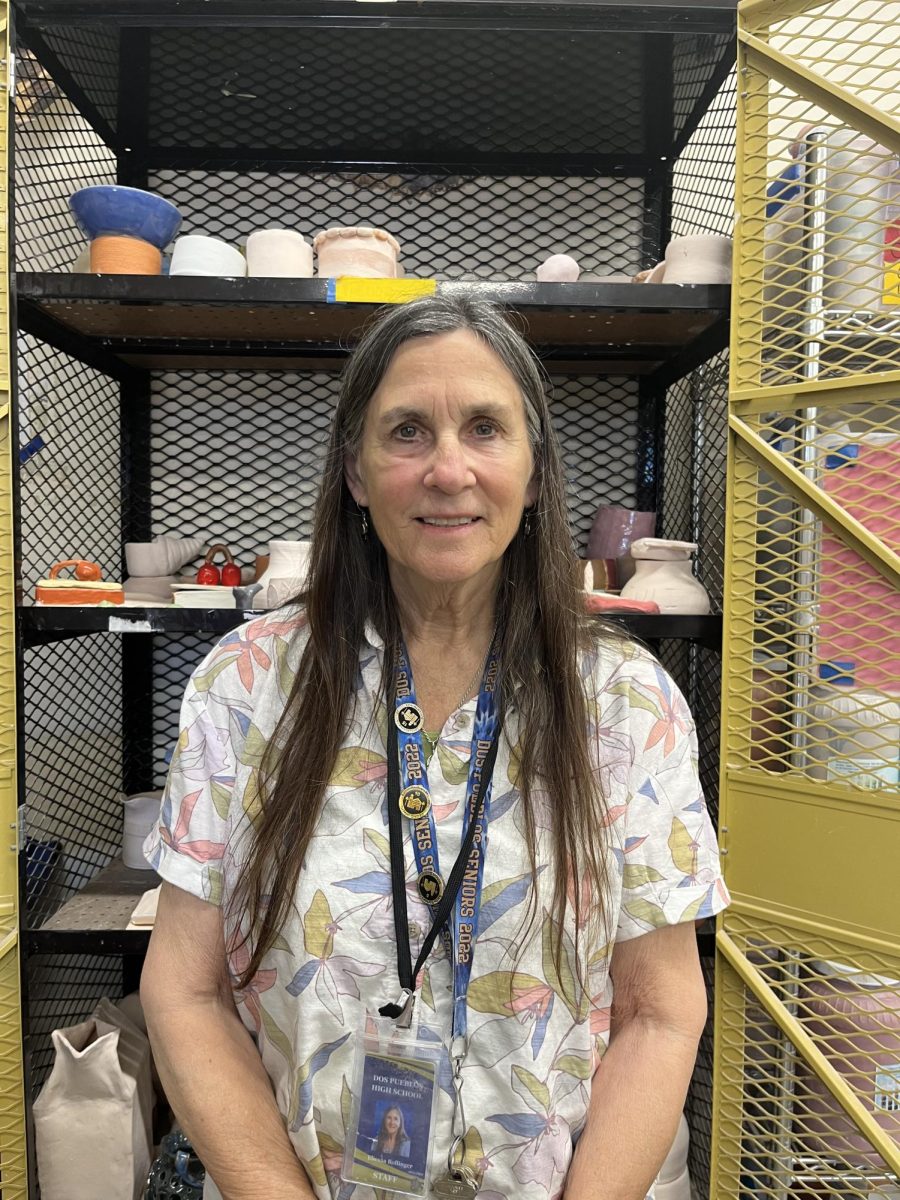
After 20 years of teaching ceramics and calligraphy, Eliesa Bollinger is retiring from Dos Pueblos High School, and is leaving the program she helped rebuild from square one.
Bollinger’s journey at DPHS began after the Occupational Safety and Health Administration shut down the previous ceramics class. Then, in around January 2006, the school asked her to teach.
“They didn’t know how to take care of a studio … it was a big mess,” Bollinger said. “I came in here, and I looked around … the teacher had old tables stacked … with a bunch of ceramic pieces on it that hadn’t been fired … the kilns were broken.”
Later, the school asked what it would take to fix the program.
“[The school] said, ‘Well, what would it take?’ And I said, ‘Well, you have to just clean all this,’” Bollinger said
According to Bollinger, many items had to be thrown out, and it took four years to turn the room into a proper studio.
Over the years, the class has grown, not just in the studio but also in the community. Bollinger nurtured strong bonds with her students and cherishes being a pivotal part of their journeys. As she steps into retirement, she hopes her students have gained a love of creativity and will continue to benefit from it.
“Stay motivated, be creative, wake up each day and seize the day,” Bollinger said.
She referred to the saying as “Carpe Diem,” the Latin phrase for “seize the day,” and encourages her students to make the most of their time.
Outside of ceramics, Bollinger enjoys a life of adventure and traveling.
“Many of my students probably don’t know that I’m a world traveler,” Bollinger said. “I don’t really talk about it that much, but I love to travel.”
Moving forward, Bollinger hopes her students know that she will miss them and that DPHS’s strong community has impacted her experience. She trusts the cohesive environment will continue.
“DP has an amazing warming culture, and that kind of culture is healing,” Bollinger said.“ I think this is a really special place for that, so I would say, keep the culture moving forward.”
Bollinger adds that she will miss having school as a part of her routine and the camaraderie involved.
“There’s something really calming about just knowing what you’re doing each day. You get up and you know you’re coming. You know you’re going to be here by 8 a.m.,” Bollinger said. “When you open a kiln, [it’s] like Christmas: you open it up, and there’s all this stuff, and it’s fun to see what kids make.”
Although retiring, she is still passionate about ceramics.
“That’s what I’m hoping to do when I retire,” Bollinger said. “I’ll just do more of my own art, and most of my art revolves around ceramics.”
Bollinger has been doing ceramics longer than she has taught, having started in high school. While she keeps her favorite pieces at home, she has some displayed publicly.
“I have some of my ceramics pieces in galleries,” Bollinger said.
She appreciates the art of ceramic and how it differs from other art mediums, allowing a balance between functionality and creativity. Clay is both moldable and fragile, teaching students how to fix mistakes.
“It’s teaching you that if something doesn’t work out, then you can always either rebuild or you can restart,” Bollinger said.
However, some artists don’t always choose to restart — a concept related to the Japanese philosophy of wabi-sabi, which finds beauty in imperfection.
“They have this thing, wabi-sabi, where they put things together, and they use a little gold leafing, and they put [it in] cracks, and they put the whole thing together,” Bollinger said.
Nonetheless, Bollinger looks forward to retirement. She will miss DPHS but also enjoys the idea of having free time to spend with family and friends.
“I have two grandchildren, so I’m looking forward to spending time with them and taking long walks with my dog and not having to say, ‘Okay, we only have a half hour because school starts,’” Bollinger said. “I can just wander more. I love going to the beach, and want to do some [more] traveling.”